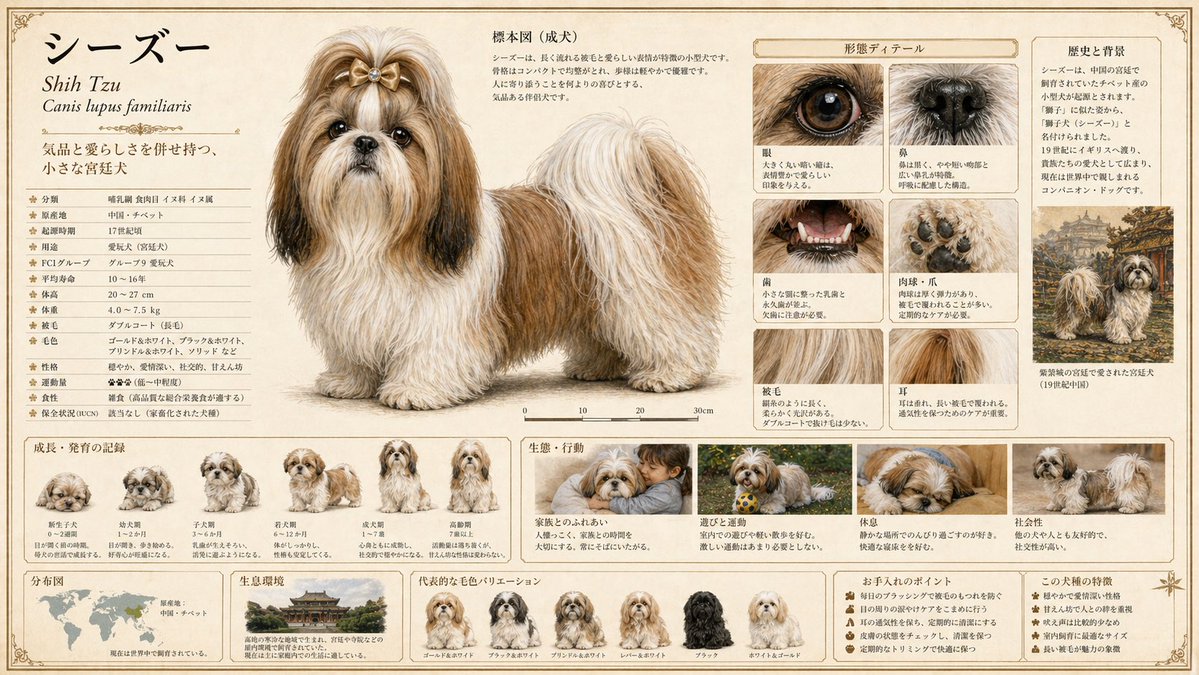
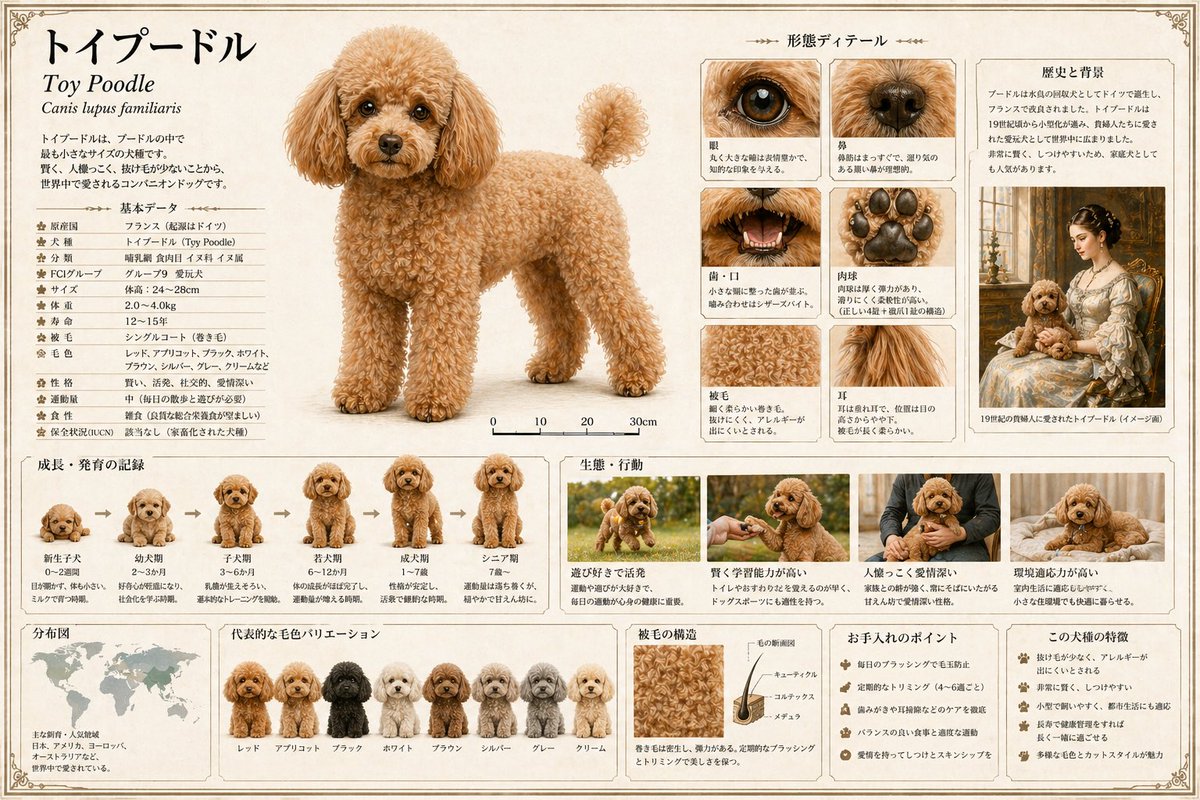
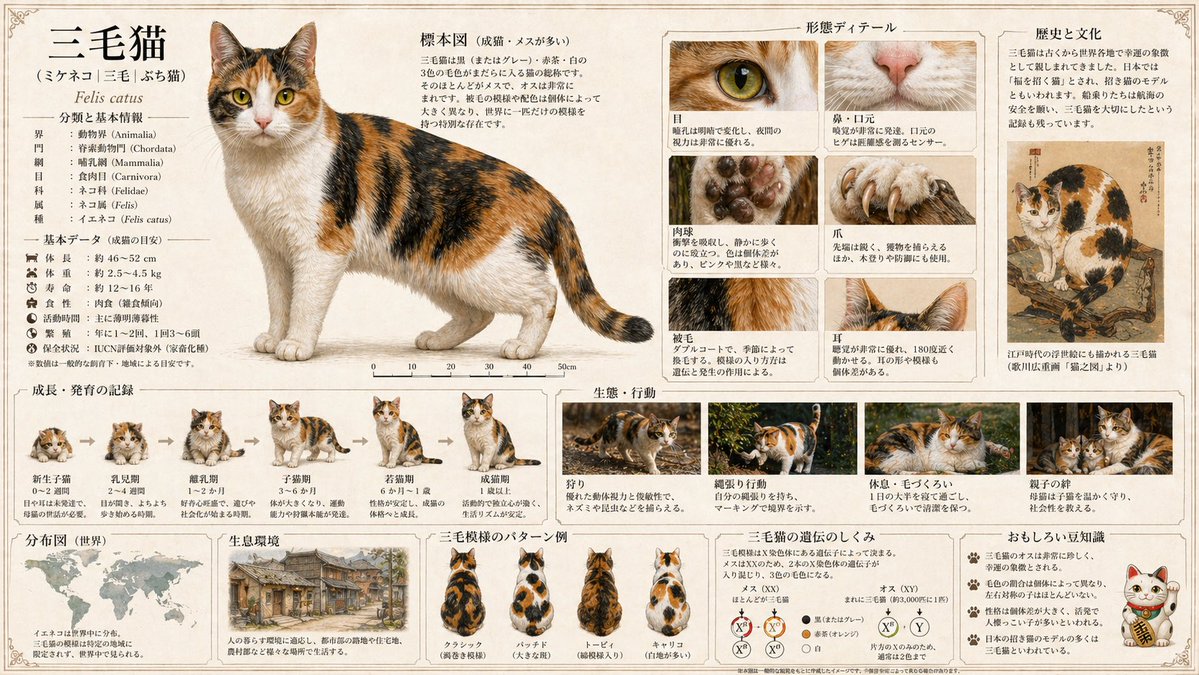
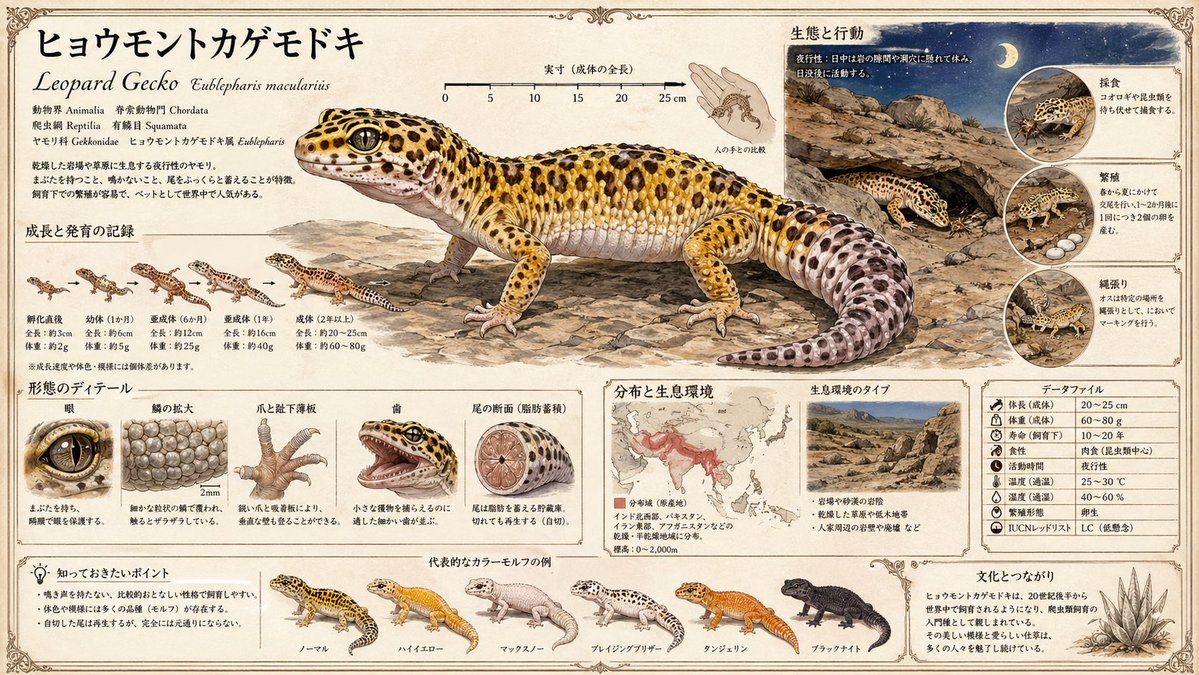
Detailed Animal Encyclopedia Generation
A sophisticated prompt for creating high-quality animal encyclopedia pages with anatomical details, habitat information, and evolutionary stages.
This product prompt is a strong starting point when you need a composed Qwen Image result with a clear subject, visual structure, and reusable style direction.
Aspect ratio
1:1 or 4:5
Quality pass
High detail
Workflow
Start text-to-image, then rerun with one focused edit at a time.
Full Qwen Image prompt
English prompt
[Animal Name]
{argument name="animal name" default="insert animal name here"}

[Objective]
Complete a large-format animal encyclopedia plate at a sellable quality level as a single illustration. Generate a publishing-quality plate that balances scientific accuracy with visual appeal.

[Output Format]
- Include all information in one image
- Aspect Ratio: 16:9
- Quality: High (essential for ensuring precision of small text, fine lines, and labels)

[Screen Design Principles]
Layout, zoning, information priority, margin design, typography, decorative elements, and color palette should all be determined autonomously by GPT based on the animal's characteristics, habitat, and classification. Design a layout best suited for this specific animal without being bound by templates.

[Essential Elements to Include]
Integrate the following elements naturally into one frame:

1. Main Specimen Drawing
- Full body of adult depicted with maximum precision
- Scientifically accurate colors, patterns, and proportions
- Scientific name (italicized), common name, and classification info (Order, Family, Genus)
- Scale bar or size comparison

2. Growth/Development Record
- Step-by-step illustration of changes from juvenile to adult
- Concise labels for each stage

3. Ecological/Behavioral Depiction
- Action scenes in natural environments (foraging, predation, breeding, territoriality, etc.)
- Include habitat vegetation and terrain in the background

4. Morphological Details
- Close-ups of characteristic parts (claws, fangs, feathers, scales, eyes, etc.)
- Magnified depictions of surface textures

5. Distribution/Habitat Range
- World or regional distribution map
- Description of habitat types

6. Data Notations
- Length, weight, lifespan, diet, conservation status (IUCN, etc.)
- Easy-to-read table or icon format

[Style Specification]
- Publisher-quality natural history encyclopedia
- Realistic botanical/naturalist painting touch (19th-century naturalist precision + modern color expression)
- Paper texture: Cream-colored hot-press watercolor paper or parchment style
- Font: Unified serif. Scientific names in italics; data can use mixed small sans-serif fonts
- Border: Thin ink border + classical plate decoration
- Overall color scheme, layout tone, and page design optimized by GPT based on habitat, classification, and ecology

[Most Important Instruction]
Deeply understand the unique ecology, cultural significance, and taxonomic features of this animal to design a page that feels like it was "made just for this animal." Visualize the essence of the animal rather than using a generic template. Ensure all text is actually rendered within the frame, leaving no empty labels.
Original prompt
【動物名】
{argument name="動物名" default="ここに動物名を入れる"}

【目的】
販売可能レベルの大判動物図鑑を、1枚のイラストとして完結させること。
学術的正確性と視覚的魅力を両立した、出版クオリティの図鑑プレートを生成してください。

【出力形式】
・1枚の画像に全情報を収める
・アスペクト比:16:9
・quality: high(小テキスト・細線・ラベル類の精度確保のため必須)

【画面設計の原則】
レイアウト・ゾーン分割・情報の優先順位・余白設計・タイポグラフィ・装飾要素・
カラーパレットは、すべて動物の特性・生息環境・分類に合わせてGPTが自律的に決定してください。
テンプレートに縛られず、この動物に最も適した誌面を設計すること。

【必ず含める情報要素】
以下の要素を1枚の画面内に自然に統合してください:

① メイン標本図
  ・成体の全身を最高精度で描写
  ・科学的に正確な体色・模様・プロポーション
  ・学名(イタリック体)・和名・分類情報(目・科・属)
  ・スケールバーまたは実寸比較

② 成長・発育記録
  ・幼体〜成体の変化を段階的に図示
  ・各ステージに簡潔なラベル

③ 生態・行動描写
  ・自然環境での行動シーン(採食・捕食・繁殖・縄張りなど)
  ・生息環境の植生・地形を背景に含める

④ 形態ディテール
  ・特徴的な部位のクローズアップ(爪・牙・羽・鱗・眼など)
  ・体表テクスチャの拡大描写

⑤ 分布・生息域
  ・世界または地域の分布地図
  ・生息環境タイプの記載

⑥ データ表記
  ・体長・体重・寿命・食性・保全状況(IUCNなど)
  ・見やすい表またはアイコン形式

【スタイル指定】
・出版社クオリティの自然史図鑑
・写実的な博物画タッチ(19世紀博物学の精緻さ+現代の色彩表現)
・用紙質感:クリーム色のホットプレス水彩紙または羊皮紙風
・フォント:セリフ体統一。学名はイタリック、データは小さめゴシック混在可
・ボーダー:細いインク枠線+クラシカルな図版装飾
・全体の配色・レイアウトトーン・誌面デザインは動物の生息域・分類・生態に合わせてGPTが最適設計

【最重要指示】
この動物に固有の生態・文化的意味・分類上の特徴を深く理解し、
「この動物のためだけに作られた図鑑ページ」になるよう設計してください。
汎用テンプレートの使い回しではなく、動物の本質を視覚化してください。
テキストはすべて画面内に実際に描写し、空白ラベルは残さないこと。Related Qwen Image prompts
VR Headset Exploded View Poster
Generates a high-tech exploded view diagram of a VR headset with detailed component callouts and promotional text.
E-commerce Live Stream UI Mockup
Generates a realistic social media live stream interface overlaying a portrait, featuring customizable chat messages, gift popups, and a product purchase card.
Pancake Angel Cafe Cover
Generates a dreamy watercolor anime cover of a winged cafe angel serving honey pancakes in a sunlit morning cafe.
Summer Grape Girl 3x3 Grid Portrait
A comprehensive prompt for creating a 3x3 photo grid of a summer-themed 'Grape Girl' with specific instructions for consistency and style.
Mystical Japanese AI Face Reading Report
Generates an ornate Japanese fortune-telling appraisal sheet with a celestial portrait, moonlit gold layout, and multiple readable report sections.
Miniature City Tiny Worlds
A macro photography prompt creating a realistic miniature city built within human hair, featuring high detail and natural skin textures.